
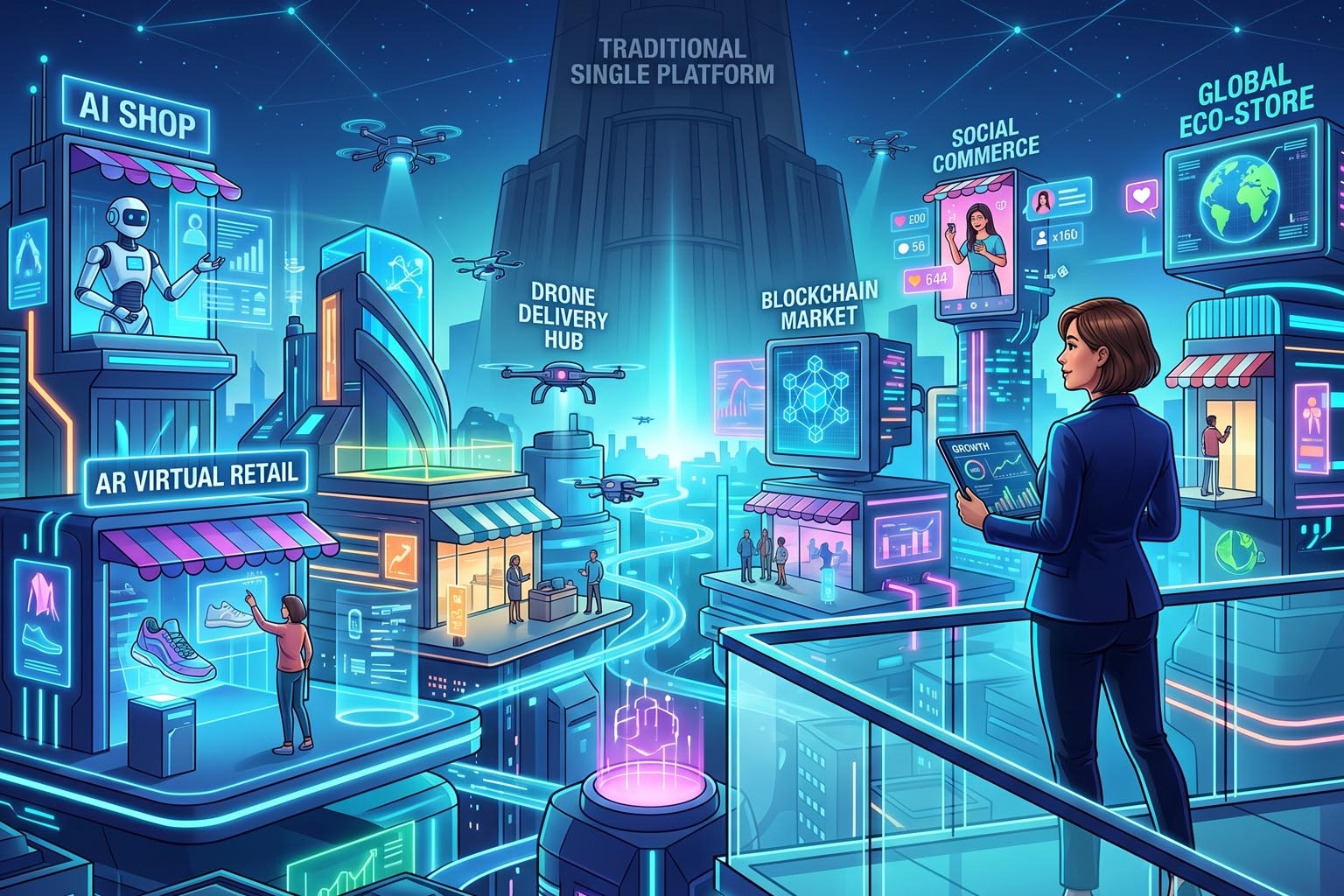
Why Businesses Are Looking Beyond Shopify in 2026
Shopify helped revolutionize ecommerce by making online stores easier to launch and manage. Its hosted infrastructure, app ecosystem, and simplified setup enabled thousands of businesses to start selling online without managing servers or complicated technical systems.
But as ecommerce businesses grow, many eventually discover the limitations of app-dependent ecommerce platforms.
In 2026, businesses are increasingly searching for alternatives to Shopify that provide greater flexibility, integrated functionality, visual customization, and stronger operational control.
The ecommerce industry is evolving beyond simple storefront management. Modern businesses now require platforms that combine website management, SEO, branding, customer engagement, analytics, and ecommerce operations into one unified system.
The Growing Problems With App-Heavy Ecommerce Systems
1. Too Many Third-Party Apps
One of Shopify’s biggest strengths is its app marketplace. However, many businesses eventually become heavily dependent on third-party apps for essential functionality.
A typical ecommerce business may require apps for:
- SEO optimization
- Product filtering
- Reviews
- Email marketing
- Analytics
- Subscriptions
- Customer support
- Page building
- Advanced customization
- Checkout enhancements
As stores scale, managing multiple apps becomes increasingly complicated.
Businesses often experience:
- higher monthly costs
- slower website performance
- inconsistent user experiences
- compatibility issues
- vendor dependency
Instead of simplifying operations, app-heavy ecosystems can eventually create operational fragmentation.
2. Increasing Monthly Costs
Many businesses initially choose Shopify because of its ease of setup. However, long-term operational costs often grow much faster than expected.
Beyond subscription fees, businesses frequently pay for:
- premium apps
- advanced integrations
- custom development
- premium themes
- automation tools
- additional services
As operational complexity increases, businesses may end up paying significantly more every month just to maintain essential functionality.
Growing ecommerce businesses are now looking for platforms that provide more built-in capabilities instead of relying on multiple paid extensions.
Limited Website Customization
Modern ecommerce businesses need more than product pages.
They also need:
- landing pages
- SEO-focused content
- blogs
- marketing pages
- custom layouts
- branded experiences
- interactive content sections
Many ecommerce systems provide limited visual customization unless businesses use external apps or developer-heavy workflows.
Businesses increasingly want:
- visual editing
- drag-and-drop design
- responsive layouts
- reusable templates
- deeper branding control
without depending heavily on developers.
Ecommerce and Website Management Should Work Together
One of the biggest shifts happening in ecommerce is the demand for unified website management.
Businesses no longer want separate systems for:
- ecommerce
- content management
- SEO
- customer engagement
- support
- analytics
Modern businesses want centralized platforms that combine all these capabilities into one environment.
This reduces operational complexity while improving scalability and efficiency.
Why Businesses Are Choosing Integrated Platforms
In 2026, businesses are prioritizing platforms that provide:
- integrated ecommerce
- visual website management
- no-code workflows
- SEO controls
- centralized analytics
- built-in security
- flexible customization
- scalable architecture
The market is shifting toward all-in-one business ecosystems instead of fragmented app-based infrastructures.
How Round Rockk and Rockk Craft Address These Challenges
Round Rockk and Rockk Craft are designed for businesses that want more control and flexibility than traditional ecommerce platforms provide.
Instead of relying heavily on external apps and disconnected systems, Rockk Craft combines:
- ecommerce management
- website building
- SEO controls
- visual editing
- customer engagement
- analytics
- security systems
- structured content management
inside one centralized platform.
No-Code Website and Ecommerce Building
Rockk Craft provides a no-code WYSIWYG website building experience designed for modern businesses.
Features include:
- drag-and-drop sections
- live previews
- reusable templates
- responsive layouts
- Bootstrap-based styling
- dynamic page sections
- visual customization controls
Businesses can create websites and ecommerce experiences faster without depending heavily on developers.
Security-First Ecommerce Infrastructure
Security is increasingly important for ecommerce businesses handling customer data and online transactions.
Rockk Craft includes built-in security features such as:
- firewall protection
- IP blocking
- captcha systems
- OAuth2 authentication
- access controls
This helps reduce dependency on multiple external security tools while improving operational protection.
The Future of Ecommerce Platforms
The ecommerce industry is moving toward platforms that combine:
- ecommerce operations
- website management
- SEO optimization
- customer engagement
- analytics
- security
- visual customization
inside unified ecosystems.
Businesses increasingly prefer platforms that simplify operations while maintaining scalability and flexibility.
The future of ecommerce is no longer just about selling products online. It is about managing complete digital business experiences from one integrated platform.
Conclusion
Shopify remains a powerful ecommerce platform, but many growing businesses are now looking for alternatives that provide greater flexibility, stronger customization, and more integrated operational control.
Modern businesses want platforms that reduce app dependency, simplify management, improve scalability, and provide better control over website and ecommerce experiences.
Round Rockk and Rockk Craft are designed to support this next generation of ecommerce management with integrated no-code tools, visual customization, security-focused architecture, and centralized business operations.
FAQ
Why are businesses moving beyond Shopify?
Businesses are looking for greater flexibility, lower app dependency, better customization, and integrated website management capabilities.
What are the limitations of app-heavy ecommerce platforms?
They can increase operational costs, create compatibility issues, reduce performance, and complicate long-term management.
What makes integrated ecommerce platforms different?
Integrated platforms combine ecommerce, website management, SEO, analytics, security, and customer engagement into one centralized system.
Does Rockk Craft support no-code website building?
Yes. Rockk Craft provides no-code WYSIWYG website building with drag-and-drop layouts and visual customization controls.
Why do businesses prefer centralized platforms?
Centralized platforms simplify operations, reduce dependency on external tools, improve scalability, and provide better management efficiency.
Looking for a modern alternative to app-heavy ecommerce platforms?
Explore how Round Rockk and Rockk Craft help businesses build scalable websites and ecommerce stores with integrated no-code tools, visual customization, and centralized management.
