
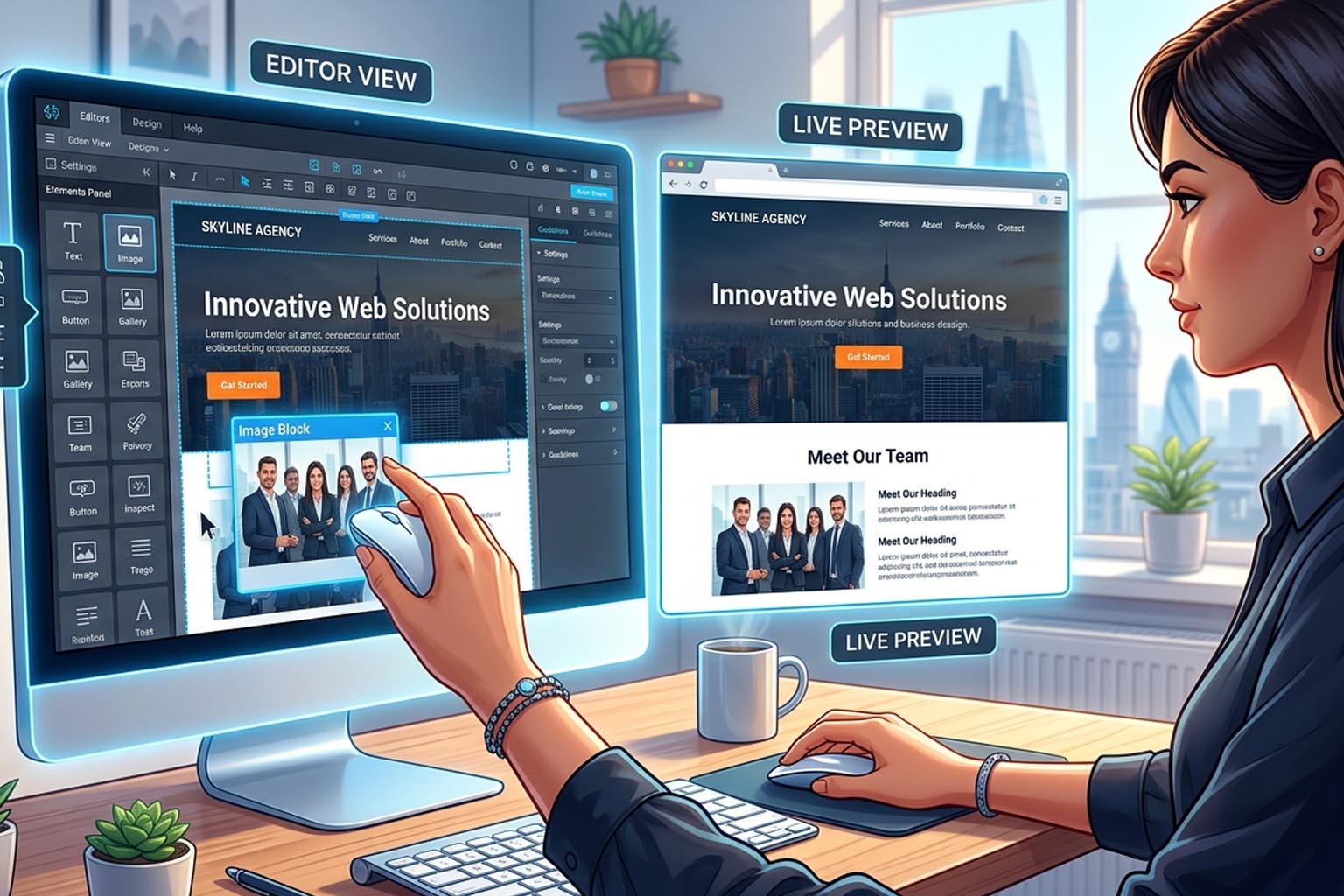
What Is WYSIWYG Website Design and Why Businesses Prefer It
Website development has evolved significantly over the past decade. Businesses no longer want slow development cycles, complicated coding workflows, or heavy dependence on developers for every website update.
Modern businesses increasingly prefer visual website management systems that allow them to create, customize, and manage websites more efficiently.
This is where WYSIWYG website design becomes important.
WYSIWYG stands for:
“What You See Is What You Get.”
It refers to website builders and visual editors that allow users to design websites visually while seeing the final appearance in real time.
Instead of editing code manually and previewing changes separately, users can directly interact with layouts, sections, images, colors, spacing, and content through visual interfaces.
As businesses move toward no-code workflows and faster digital operations, WYSIWYG website design is becoming one of the most preferred approaches for website management.
What Is WYSIWYG Website Design?
WYSIWYG website design allows users to visually build and edit websites while seeing changes instantly.
Instead of writing HTML, CSS, or JavaScript manually, users interact with:
- layouts
- sections
- templates
- text
- images
- buttons
- colors
- spacing
- containers
through visual controls.
The website displayed inside the editor closely represents the final published version.
This creates a more intuitive and efficient website management experience.
Why Traditional Website Editing Became Difficult
Traditional website development often depends heavily on:
- manual coding
- theme editing
- plugin configuration
- developer workflows
- backend customization
For many businesses, this creates operational challenges such as:
- slower updates
- higher development costs
- dependency on technical teams
- inconsistent layouts
- complicated maintenance
Even small design changes may require developer involvement.
As businesses grow and websites become more dynamic, traditional workflows can slow down operations significantly.
Why Businesses Prefer WYSIWYG Website Builders
1. Faster Website Management
Businesses need the ability to:
- update pages quickly
- launch campaigns faster
- publish content instantly
- modify layouts easily
- manage websites efficiently
WYSIWYG website builders simplify these tasks through visual editing.
Teams can make updates without waiting for development cycles or writing code manually.
This improves operational speed and agility.
2. No-Code Website Editing
Modern businesses increasingly prefer no-code workflows.
WYSIWYG editors allow users to:
- create pages visually
- drag and arrange sections
- customize designs
- edit content directly
- preview layouts instantly
without requiring programming knowledge.
This makes website management accessible to:
- startups
- ecommerce businesses
- marketing teams
- agencies
- small businesses
- content creators
Better Visual Control
Businesses want websites that reflect their branding and customer experience goals.
WYSIWYG website design provides more direct visual control over:
- spacing
- layouts
- typography
- colors
- containers
- sections
- backgrounds
- responsive behavior
Instead of editing styles manually through code, users can customize websites visually while maintaining design consistency.
Reduced Dependency on Developers
One of the biggest reasons businesses prefer WYSIWYG systems is reduced dependency on developers for everyday website management.
Businesses can:
- edit pages
- update layouts
- change banners
- modify sections
- update branding
- publish content
without requiring technical assistance for every update.
This reduces:
- development bottlenecks
- operational delays
- maintenance costs
while improving flexibility.
Better Consistency Across Websites
Traditional website workflows often create inconsistent layouts because different plugins, themes, and custom modifications behave differently.
WYSIWYG systems usually provide:
- reusable templates
- centralized styling
- structured sections
- visual design consistency
This helps businesses maintain:
- cleaner branding
- consistent layouts
- professional user experiences
- scalable design systems
Why WYSIWYG Design Matters for Ecommerce
Modern ecommerce businesses need more than product pages.
They also require:
- landing pages
- promotional sections
- SEO-focused content
- banners
- FAQs
- testimonials
- responsive layouts
- branded customer experiences
WYSIWYG ecommerce builders help businesses create these experiences visually while integrating ecommerce functionality directly into the platform.
This simplifies website and ecommerce management.
The Shift Toward Visual Website Platforms
The web industry is increasingly moving toward:
- no-code workflows
- visual website management
- drag-and-drop systems
- reusable templates
- integrated platforms
Businesses want faster and more efficient ways to manage websites without dealing with technical complexity.
WYSIWYG website builders are becoming the standard because they balance usability, flexibility, and scalability.
How Round Rockk and Rockk Craft Support WYSIWYG Website Design
Round Rockk and Rockk Craft are designed to provide modern no-code website management with visual editing capabilities.
The platform combines:
- WYSIWYG website building
- visual customization
- template-based layouts
- integrated ecommerce
- responsive design controls
- SEO management
- centralized website operations
inside one scalable platform.
Visual Website Building With Rockk Craft
Rockk Craft allows businesses to:
- create pages visually
- customize layouts
- manage sections
- edit headers and footers
- control spacing and styling
- use reusable templates
- preview changes instantly
through an intuitive no-code interface.
The platform also supports:
- Bootstrap-based styling controls
- dynamic sections
- responsive layouts
- ecommerce integration
- centralized management
This helps businesses create professional websites faster while maintaining greater control over customization.
Security and Scalability for Modern Businesses
Modern businesses also require secure and scalable infrastructure.
Rockk Craft includes built-in:
- firewall protection
- IP blocking
- captcha systems
- OAuth2 authentication
- access controls
This reduces dependency on multiple external security tools while improving operational protection.
The Future of Website Design
The future of website management is becoming increasingly visual, no-code, and integrated.
Businesses no longer want fragmented systems that require:
- excessive plugins
- complicated coding
- disconnected tools
- developer-heavy workflows
WYSIWYG website design represents a shift toward faster, more accessible, and more scalable website management.
As digital operations continue evolving, visual website platforms will play an even larger role in how businesses build and manage online experiences.
Conclusion
WYSIWYG website design allows businesses to create and manage websites visually without depending heavily on coding or developer workflows.
Modern businesses prefer visual website builders because they improve speed, flexibility, customization, and operational efficiency.
Round Rockk and Rockk Craft are designed to support this modern approach through no-code website building, visual customization, integrated ecommerce, responsive layouts, and centralized website management.
For businesses looking to simplify website operations while maintaining design flexibility and scalability, WYSIWYG website platforms are becoming the preferred solution.
FAQ
What does WYSIWYG mean?
WYSIWYG stands for “What You See Is What You Get,” meaning users can visually edit websites while seeing the final appearance in real time.
What is a WYSIWYG website builder?
A WYSIWYG website builder allows users to design and manage websites visually without manually writing code.
Why do businesses prefer visual website builders?
Businesses prefer visual website builders because they simplify website management, reduce developer dependency, and improve customization speed.
Are WYSIWYG website builders suitable for ecommerce?
Yes. Modern WYSIWYG platforms increasingly combine visual website management with integrated ecommerce functionality.
Does Rockk Craft support WYSIWYG editing?
Yes. Rockk Craft provides visual no-code website building with drag-and-drop sections, reusable templates, responsive layouts, and live previews.
Looking for a modern WYSIWYG website and ecommerce platform?
Explore how Round Rockk and Rockk Craft help businesses build visually customizable, scalable, and secure websites without coding complexity.
