
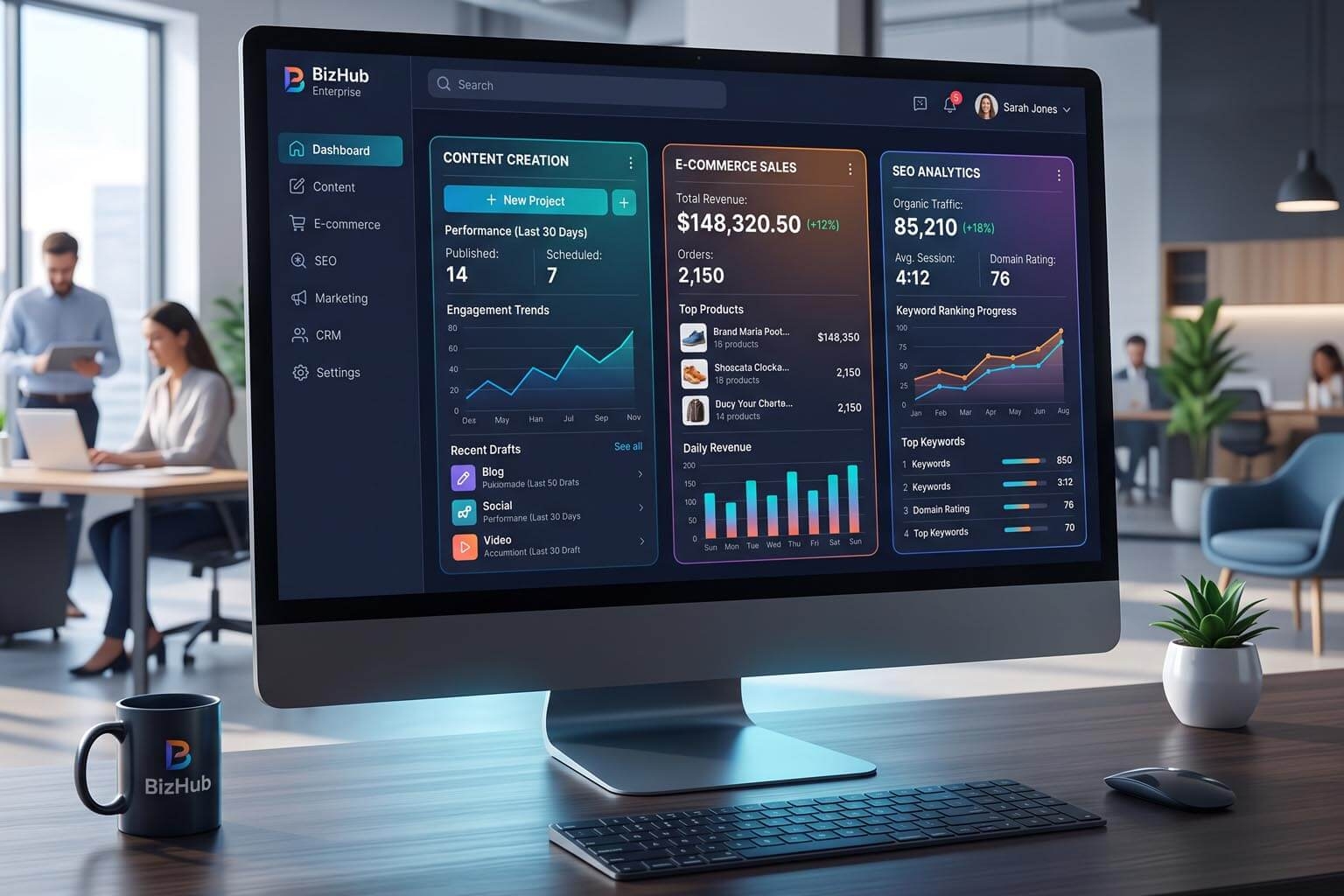
Managing Content, Ecommerce, and SEO From One Platform
Running a modern online business involves much more than simply having a website.
Businesses need to publish content, manage products, process orders, optimize pages for search engines, maintain customer information, manage sellers, and continuously update their online presence.
The problem is that these activities are often spread across multiple platforms.
A business may use one system for its website, another for ecommerce, separate tools for SEO, additional plugins for marketing, and different services for hosting and managing content. While each tool may solve a specific problem, managing all of them together can become expensive and complicated.
A centralized platform can change this.
The Problem With Using Multiple Platforms
When content management, ecommerce, and SEO are handled separately, businesses often have to deal with:
- Multiple dashboards and logins
- Different subscriptions and recurring costs
- Plugin and application dependencies
- Repeated configuration and maintenance
- Data being distributed across different systems
- More complicated integrations
- Higher development and maintenance costs
As a business grows, this complexity can become a significant operational burden.
Instead of focusing on customers and sales, teams can end up spending time managing the technology behind the business.
Managing Website Content From One Place
Content is an important part of any modern website.
Businesses need to regularly update pages, publish articles, create landing pages, update banners, add FAQs, change pricing information, and make other changes.
A centralized content management system allows these activities to be handled from one environment.
Instead of depending on developers for every small change, businesses can manage their content visually and make updates much faster.
This is particularly valuable for businesses that frequently change their products, promotions, services, or marketing campaigns.
Ecommerce Should Be Part of the Same System
Content and ecommerce are closely connected.
A product page is not simply a product listing. It is also content that needs to communicate value, provide useful information, attract search traffic, and convert visitors into customers.
When ecommerce and content management exist within the same platform, businesses can manage their website and store together.
A modern ecommerce platform should support different business models, including:
- Physical products
- Virtual products
- Subscription-based products
- Trial-based virtual and subscription offerings
- Multiple sellers
- Multiple websites
This gives businesses the flexibility to build different types of online operations without having to assemble multiple systems.
SEO Should Not Be an Afterthought
Search engine optimization is another important part of website management.
SEO affects how pages are discovered, how they appear in search results, and how businesses attract organic visitors.
When SEO settings are integrated into the website management workflow, businesses can optimize their content while creating and updating pages.
Important SEO elements can include:
- Page titles
- Meta descriptions
- URLs
- Headings
- Structured content
- Search-friendly page architecture
- Image optimization
- Internal linking
The advantage of integrating SEO into the platform is simple: optimization becomes part of the publishing process rather than another task requiring a separate system.
One Platform Can Reduce Operational Complexity
The biggest advantage of centralization is not simply having fewer dashboards.
It is reducing the number of systems a business has to maintain.
When website content, ecommerce, and SEO are connected, businesses can reduce unnecessary dependencies and make their workflows more efficient.
This can also reduce costs associated with development, maintenance, hosting, plugins, integrations, and third-party applications.
Centralized Resources Can Improve Efficiency
There is another important consideration when building websites at scale.
Many websites use the same types of resources, such as JavaScript, CSS, fonts, business logic, and common platform functionality.
Creating and maintaining separate copies of the same resources for every website can lead to unnecessary duplication.
A centralized platform can instead manage common resources centrally and reuse them across multiple websites.
This approach can reduce duplication while allowing each business to maintain its own branding, content, products, and customer experience.
How RoundRockk Approaches Website Management
RoundRockk brings website creation, content management, ecommerce, and SEO into one platform.
The goal is not simply to provide another website builder. It is to provide businesses with a modern environment where different parts of their online operation can work together.
RoundRockk provides dedicated dashboards for administrators and staff, sellers, and users. Businesses can manage physical, virtual, and subscription-based products, including trial options for virtual and subscription offerings.
The platform also supports multi-site and multi-seller environments, making it possible to manage more complex online businesses from a centralized system.
At the same time, the interface is designed around concepts familiar to users of platforms such as WordPress, cPanel, and Webflow. This helps businesses move toward modern infrastructure without forcing their teams to completely relearn how to manage their online presence.
A Better Way to Manage Online Businesses
Businesses should not have to maintain a collection of disconnected systems just to operate a modern website and ecommerce business.
Content, ecommerce, and SEO are interconnected parts of the same online experience. Managing them from one platform can simplify operations, reduce dependencies, lower maintenance costs, and help teams work faster.
The future of website management is not necessarily about adding more tools.
It is about building platforms where the tools businesses already need work together.
That is the idea behind RoundRockk: a centralized, modern platform that brings website management, content, ecommerce, and SEO together while keeping the experience familiar for the people who use it.
