
The Hidden Cost of WordPress Plugins for Growing Businesses
WordPress powers millions of websites worldwide, but for growing businesses, managing a WordPress website often becomes more complicated over time.
What begins as a simple website can quickly evolve into a fragile system dependent on dozens of plugins for SEO, ecommerce, security, backups, forms, analytics, design customization, and performance optimization.
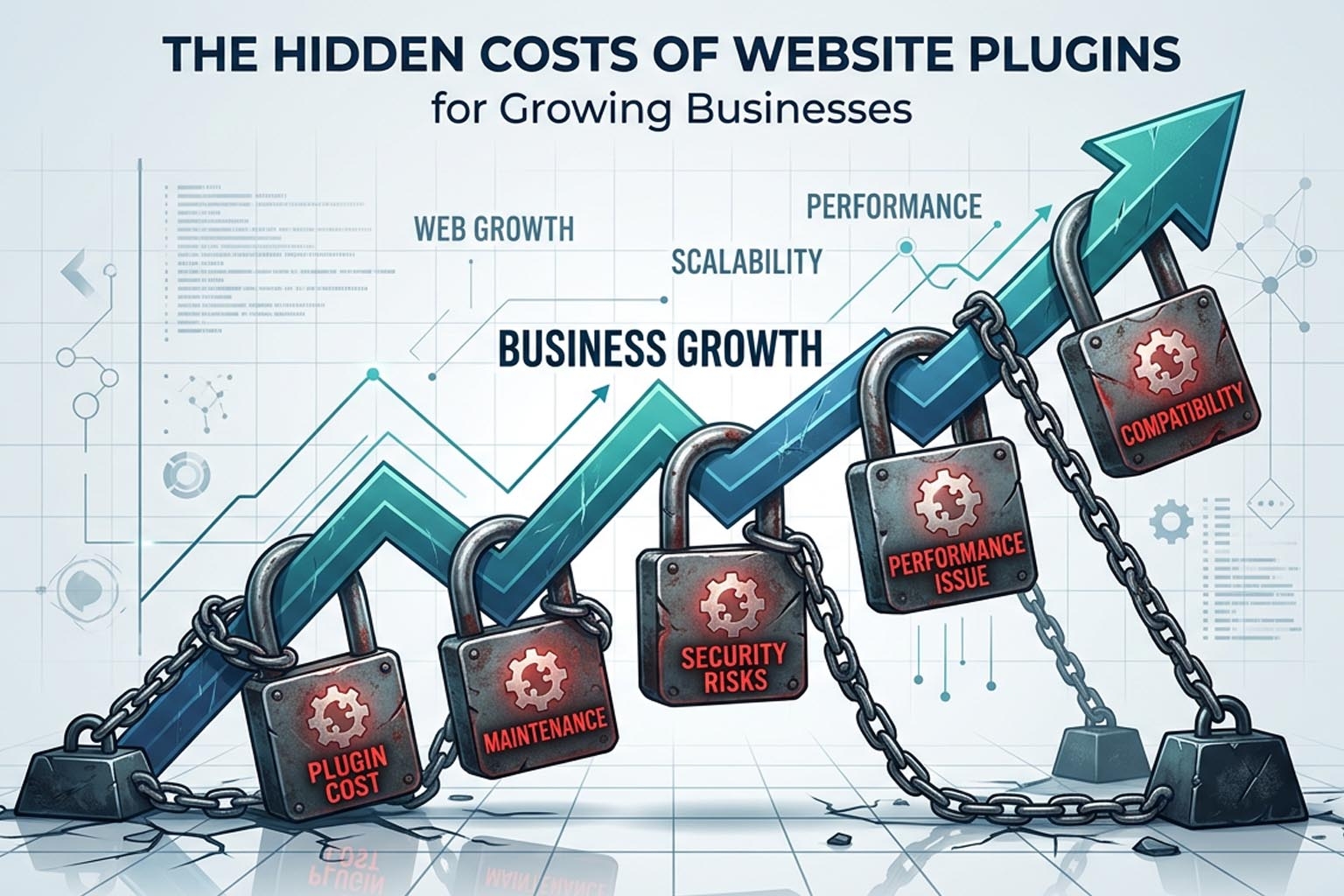
While plugins extend functionality, excessive dependency on plugins creates hidden costs that affect website speed, security, scalability, maintenance, and business operations.
As businesses scale, many are now searching for modern alternatives to WordPress that provide integrated functionality without plugin overload.
Why Businesses Depend Heavily on WordPress Plugins
The WordPress ecosystem is highly flexible because most features are added through plugins.
A typical business website may require plugins for:
- Ecommerce functionality
- SEO optimization
- Security protection
- Page builders
- Contact forms
- Caching
- Performance optimization
- Analytics
- Membership systems
- Backup management
- Social sharing
- Email integrations
Although plugins provide convenience initially, the complexity increases significantly as websites grow.
The Real Problems Caused by Plugin Overload
1. Website Performance Issues
Every plugin adds additional code, scripts, database queries, and assets that can slow down website performance.
Slow websites negatively impact:
- User experience
- Search engine rankings
- Conversion rates
- Mobile performance
- Customer retention
Many businesses eventually spend additional money optimizing problems created by excessive plugin usage.
2. Increased Security Risks
One vulnerable plugin can expose an entire website to security threats.
WordPress websites are common targets for:
- Malware attacks
- Brute-force login attempts
- SQL injection
- Plugin vulnerabilities
- Outdated software exploits
Managing plugin updates and compatibility becomes a continuous security responsibility.
Businesses handling ecommerce or customer data face even greater risks when relying heavily on third-party plugins.
3. Plugin Compatibility Problems
As WordPress core updates, plugins may become incompatible with:
- Themes
- Other plugins
- Ecommerce systems
- Payment gateways
- Custom functionality
A single update can unexpectedly break layouts, forms, checkout systems, or website functionality.
This creates operational instability for businesses that depend on their websites daily.
4. Rising Maintenance Costs
Businesses often underestimate the ongoing cost of maintaining plugin-heavy websites.
Maintenance usually includes:
- Plugin updates
- Security monitoring
- Backup management
- Performance optimization
- Compatibility testing
- Developer support
- Bug fixing
Over time, maintenance costs can exceed the original website development cost.
5. Dependency on Multiple Vendors
Most WordPress websites rely on plugins created by different developers and companies.
This creates fragmented support systems where:
- Some plugins stop receiving updates
- Documentation becomes outdated
- Support quality varies
- Features become abandoned
- Conflicts remain unresolved
Businesses lose operational reliability when core website functionality depends on multiple third-party providers.
Why Businesses Are Moving Toward Integrated Platforms
Modern website and ecommerce platforms are increasingly replacing plugin-heavy workflows with integrated ecosystems.
Instead of relying on separate tools for every feature, businesses now prefer platforms that combine:
- Website management
- Ecommerce functionality
- SEO controls
- Security systems
- Analytics
- Customer management
- Design customization
- Performance optimization
from one centralized environment.
This reduces complexity while improving scalability and operational efficiency.
How Round Rockk Solves Plugin Dependency Problems
Round Rockk and Rockk Craft are designed to help businesses avoid the operational issues caused by fragmented website ecosystems.
Instead of requiring multiple plugins and external tools, the platform provides:
- Integrated ecommerce functionality
- Built-in SEO management
- Visual website customization
- Security-focused architecture
- Structured content management
- Drag-and-drop layouts
- Responsive design controls
- Customer engagement tools
- Analytics and reporting
Businesses can manage websites, content, ecommerce, and customer interactions from one unified platform.
No-Code Website Management Without Complexity
Many businesses want flexibility without depending heavily on developers.
Round Rockk provides:
- No-code workflows
- WYSIWYG visual editing
- Template-based page creation
- Bootstrap-based styling controls
- Live previews
- Reusable website sections
This helps businesses launch and scale websites faster while maintaining greater design control.
Security-First Website Architecture
Security is one of the biggest concerns for growing online businesses.
Unlike traditional plugin-heavy systems, Round Rockk includes built-in security features such as:
- Firewall protection
- IP blocking
- Captcha systems
- OAuth2 authentication
- Access controls
This reduces dependency on external security plugins and helps businesses maintain safer online operations.
The Future of Website Platforms
Businesses are increasingly moving toward platforms that simplify operations while providing greater scalability and control.
The future of website management is shifting toward:
- Integrated ecosystems
- No-code workflows
- Visual customization
- Built-in ecommerce tools
- Centralized management
- Security-first infrastructure
rather than fragmented plugin ecosystems that require constant maintenance.
Conclusion
WordPress plugins offer flexibility, but excessive plugin dependency introduces long-term performance, security, maintenance, and scalability challenges for growing businesses.
As digital operations become more complex, businesses are increasingly looking for modern alternatives that simplify website management while maintaining flexibility and customization.
Platforms like Round Rockk and Rockk Craft help businesses build websites and ecommerce experiences without relying on dozens of disconnected plugins and third-party systems.
For businesses focused on growth, operational efficiency, and long-term scalability, integrated platforms are becoming the smarter choice.
FAQ
Why do WordPress websites use so many plugins?
WordPress relies heavily on plugins to extend functionality such as ecommerce, SEO, security, forms, analytics, and design customization.
Can too many plugins slow down a website?
Yes. Excessive plugins can increase database queries, scripts, and assets that negatively affect website speed and performance.
Are plugin-heavy websites harder to secure?
Yes. Every plugin introduces potential vulnerabilities, especially if plugins are outdated or poorly maintained.
What is a modern alternative to WordPress?
Modern platforms like Round Rockk provide integrated website management, ecommerce, SEO, security, and visual customization without relying heavily on plugins.
Why are businesses moving toward integrated platforms?
Integrated platforms simplify management, reduce maintenance complexity, improve security, and provide centralized control over business operations.
Looking for a modern alternative to WordPress plugin overload?
Explore how Round Rockk and Rockk Craft help businesses build secure, scalable websites and ecommerce stores with integrated no-code tools and visual website management.
